When PBT Pro Isn't Quite Tough Enough.
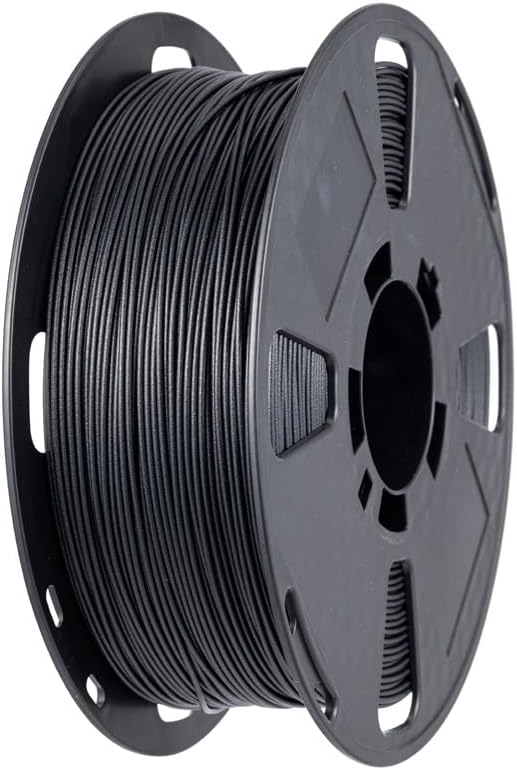
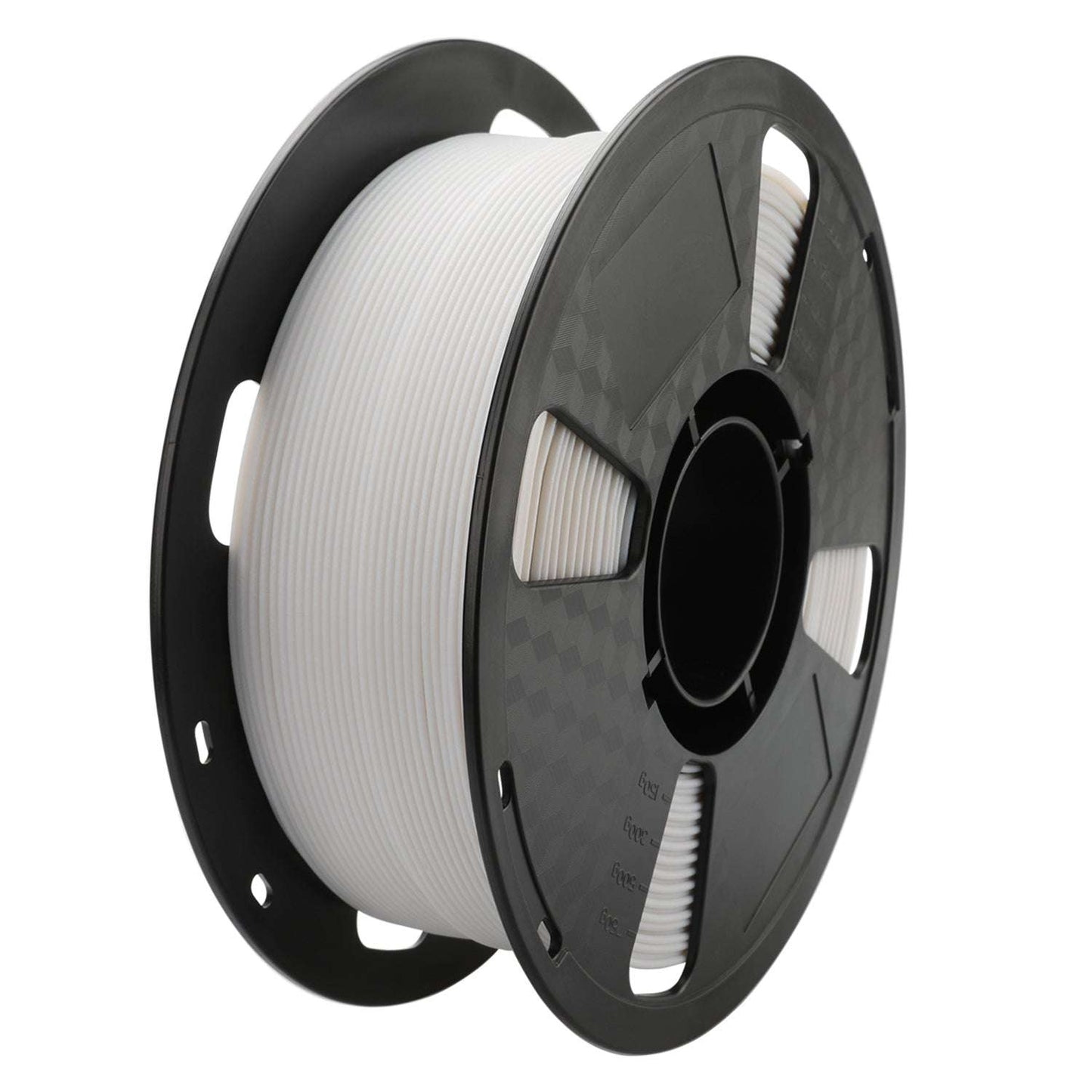
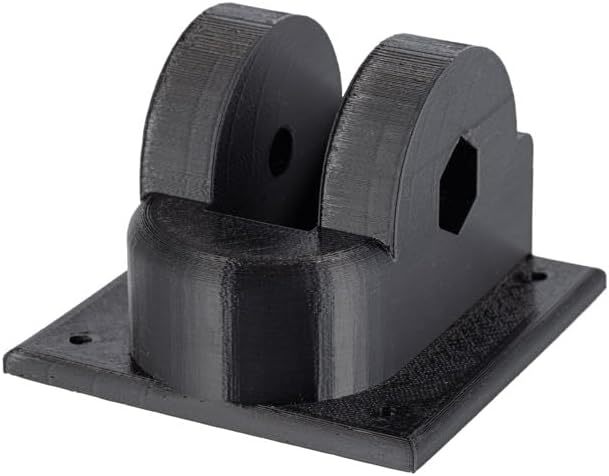
S3DPS PBT Tough is the upgraded mechanical variant in the S3DPS PBT range — built for the same demanding engineering environments as PBT Pro, but formulated to handle harder use. More impact resistance, better behaviour under continuous mechanical load, and the same glass fibre reinforcement that gives the whole PBT range its rigidity and chemical resistance. If you're printing clips, brackets, or housings that keep breaking or deforming in service, PBT Tough is where the conversation starts.
Same Material Family. Meaningfully Tougher.
PBT Tough shares its base polymer family with PBT Pro — glass fibre-reinforced Polybutylene Terephthalate — but the formulation is tuned for better impact and load tolerance. The flexural modulus steps up to ~800 MPa (versus 708 MPa for Pro), notched impact resistance reaches ~20.5 kJ/m², and tensile strength improves to ~23.5 MPa. These are not dramatic differences on paper, but in real parts that experience repeated snap-fit cycles, impact loads, and sustained mechanical stress, the delta matters.
Heat Resistance to 130°C
PBT Tough maintains dimensional stability at temperatures up to 130°C under passive, no-load conditions, and carries a supplier-reported HDT that makes it suitable for parts operating in warm environments where sustained heat exposure is part of the application. This covers a wide range of practical uses — from proximity to automotive heat sources to electronic enclosures in warm industrial environments.
Glass Fibre Reinforced — Hardened Nozzle Required
Like PBT Pro, PBT Tough contains glass fibre reinforcement. This is what gives it its stiffness and abrasion resistance, but it also means the filament is abrasive to nozzles. A hardened steel nozzle — or at a minimum a stainless steel nozzle — is required. Running PBT Tough through a brass nozzle will cause measurable wear within a few hours and lead to flow problems, over-extrusion drift, and print quality degradation. Don't skip this step.
Excellent Chemical Resistance
PBT Tough inherits PBT's strong resistance to oils, greases, diluted acids and alkalis, alcohols, aromatic hydrocarbons, and many common workshop solvents and cleaning agents. Parts that live in chemically exposed environments — workshop floors, engine bays, agricultural machinery, industrial equipment — hold up comfortably where PETG or PLA would fail.
Low Moisture Absorption
PBT absorbs far less moisture than Nylon, meaning PBT Tough parts retain their mechanical properties and dimensional accuracy in humid, outdoor, or wet-exposure applications without swelling or losing stiffness over time.
Dry It Before You Print — Every Time
Despite lower moisture sensitivity than Nylon, PBT Tough is still hygroscopic enough to print badly from a wet spool. Bubbling, stringing, rough surface texture, and weak layer bonds are the symptoms. Dry at 65–70°C for 6–8 hours before printing, or at 80°C for 4–6 hours if your dryer supports it. For long jobs, print directly from a filament dryer.
Enclosure Recommended
An enclosure at a 35–55°C chamber temperature is recommended for PBT Tough, particularly for wide, flat, or tall parts. The semi-crystalline structure creates shrink stress as parts cool — a stable warm chamber significantly reduces corner lifting and interlayer cracking on demanding geometries.
Bed Adhesion Strategy
Use a PVP glue stick or 3DLAC spray on a textured PEI, G10, or engineering-grade build plate. PBT is unpredictable on bare surfaces — it can under-adhere and lift, or over-bond and take the surface coating with it on removal. A thin release/adhesion layer costs almost nothing and prevents both problems.
What Can You Make With S3DPS PBT Tough?
PBT Tough is the right choice when the part's most likely failure mode is impact, repeated flex, or sustained mechanical load:
-
High-stress snap fits and living hinges — parts that need to flex and return repeatedly without fatigue cracking, in environments where chemical exposure is also a factor
-
Automotive clips, brackets, and mechanical fasteners — components that experience vibration, impact, and repeated handling in warm, chemically exposed environments
-
Industrial load-bearing housings — enclosures and structural mounts that carry real mechanical loads in sustained-use applications
-
Agricultural and mining components — bushings, guides, and protective covers for machinery that takes real physical abuse alongside chemical exposure
-
Robotics and mechanical assemblies — structural frames, mounts, and linkages, where impact and repeated cycle loads are part of normal operation
-
Replacement components for injection-moulded engineering parts — where the original part breaks by impact or fatigue, and a tougher material is needed for the replacement
PBT Pro vs PBT Tough — Which One Do You Need?
Both materials share the same glass fibre reinforced PBT base and print in broadly similar conditions. The decision comes down to failure mode. If your parts are failing by chemical attack, heat soak, or dimensional drift, PBT Pro covers those cases well. If they're failing by impact, snap-fit fatigue, or load abuse, PBT Tough is the better choice. When in doubt, PBT Tough is the safer pick for any part that will experience real mechanical stress in service.
| Property |
PBT Pro |
PBT Tough |
| Tensile Strength |
22.4 MPa |
~23.5 MPa |
| Elongation at Break |
261.9% |
~270% |
| Flexural Strength |
20 MPa |
~23 MPa |
| Flexural Modulus |
708 MPa |
~800 MPa |
| Notched Impact |
19.1 kJ/m² |
~20.5 kJ/m² |
| Unnotched Impact |
101.2 kJ/m² |
~105 kJ/m² |
| Heat Resistance (no-load) |
130°C |
130°C |
| HDT (loaded) |
156°C |
~130°C |
| Best For |
Balanced stiffness + high HDT |
Impact and mechanical load abuse |
Recommended Print Settings:
- Printing Temperature: 235–250°C (240°C first layer recommended)
- Bed Temperature: 75°C first layer, 70°C thereafter
- Perimeter Speed: 30–50mm/s
- Cooling Fan: 0% for first 5 layers; 0–10% for strength parts; up to 35% on bridges only
- Nozzle: Hardened steel or stainless steel — required (0.6mm recommended for production)
- Enclosure: Recommended — 35–55°C chamber
- Bed Surface: Textured PEI, G10, or engineering plate with PVP glue or 3DLAC
- Retraction (Direct Drive): 0.6–1.0mm at 30–40mm/s
- Drying: 65–70°C for 6–8 hours before printing; print from dryer for long jobs
Technical Data:
| Property |
Value |
| Print Temperature |
235–250°C (240°C first layer) |
| Bed Temperature |
75°C first layer / 70°C thereafter |
| Tensile Strength |
~23.5 MPa |
| Elongation at Break |
~270% |
| Flexural Strength |
~23 MPa |
| Flexural Modulus |
~800 MPa |
| Notched Impact (Izod) |
~20.5 kJ/m² |
| Unnotched Impact (Izod) |
~105 kJ/m² |
| Heat Resistance (no-load) |
130°C |
| Density |
~1.30 g/cm³ |
| Melt Flow Index |
8–15 g/10 min |
| Diameter |
1.75mm ± 0.02mm |
| Net Weight |
1kg |
In the Box:
- 1x S3DPS PBT Tough Filament – 1kg Spool